Top 5 controversies that shook Formula 1 In 2025
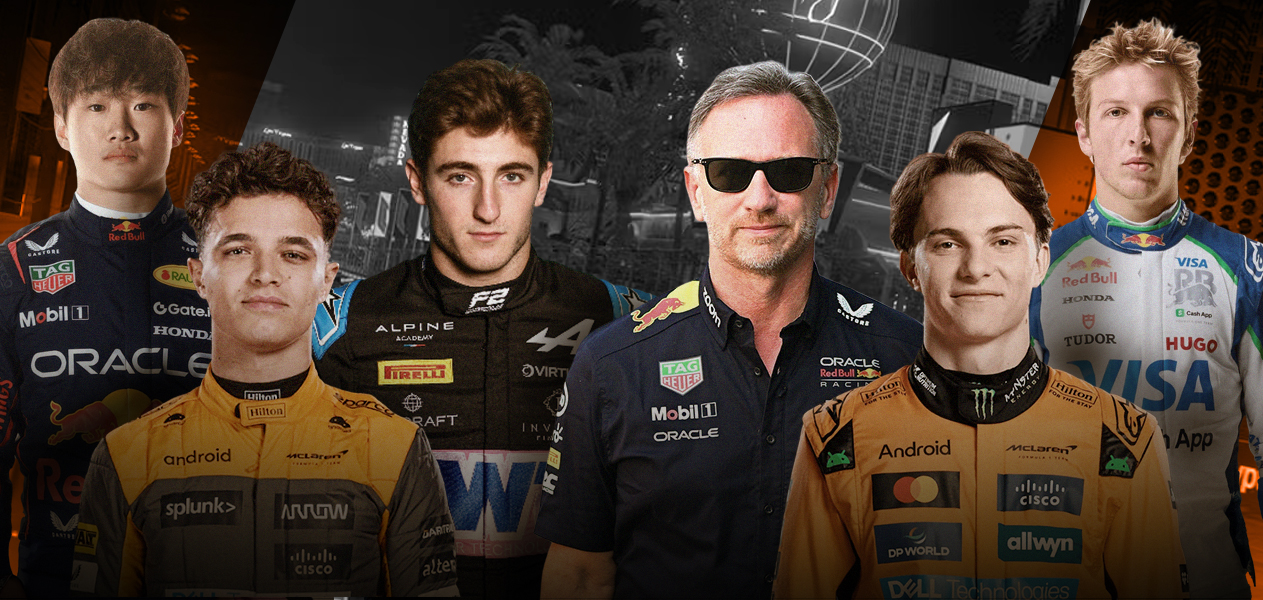
The 2025 Formula One season has been one filled with controversy, including fierce intra-team battles, team-wide chaos, mid-season bans, and shock exits.
Here are five of the most controversial moments from the F1 2025 season.
5 | Heated McLaren team orders in Singapore
The incident that has created headlines at McLaren arrived when Lando Norris dived down the inside of Oscar Piastri during the Singapore Grand Prix.
Norris was caught out by Max Verstappen, slowing more than he expected, resulting in the Brit touching the Red Bull car, damaging his own McLaren’s front-wing endplate, and bouncing side-on into Piastri who had to apply the brakes, allowing Norris to move ahead into third place.
McLaren’s internal rules dictate that the drivers are free to race but must not make contact with each other.
Piastri said over the radio: “That wasn’t very team-like, but sure.”
Shortly afterwards, he added: “Are we cool with Lando just barging me out of the way?”
His engineer Tom Stallard said the team were “looking at it”, before coming back to tell Piastri that they would take “no action in the race” because “Lando had to avoid Verstappen” and that they would “review it afterwards”.
Piastri replied that the decision was “not fair” and used an expletive in relation to Norris avoiding Verstappen “by crashing into his teammate”.
For further context, this was another incident in a series of situations where McLaren’s internal policy has gone against Piastri, and the optics don’t look great.
In Hungary in August, Piastri was the lead McLaren driver, yet Norris was allowed to switch strategies in a move that eventually led to the latter winning the race. In Italy in September, McLaren ordered Piastri to give second place back to Norris after a slow pit stop for the Brit, which resulted from an unusual team decision to pit Piastri — the second of the two drivers — first, leading to Norris losing P2. Piastri objected to that decision, saying he thought they had agreed that slow pit stops were to be considered part of racing, and therefore not something that should be corrected. But he acquiesced all the same.
4 | Chaos at Alpine
This decade, for the most part Alpine have been seen as a revolving door for management and drivers, causing the team to fall behind their rivals.
But heading into 2025, the ship looked to be finally stabilising at Team Enstone. After two impressive seasons, Pierre Gasly was retained as the lead driver, signing a new two-year deal in the summer of 2024.
However, all wasn’t well at Alpine as 2025 dawned, as questions surrounded the future of the team’s second driver, Jack Doohan. Despite earning his spot on merit after two years as Alpine’s reserve driver, Doohan’s place was threatened by the arrival of Argentine hotshot Franco Colapinto as reserve driver over the winter.
Almost immediately, things started to go wrong for Alpine, with the team failing to score a point in the first three races. As for Doohan, the start to the year was an unhappy one as he crashed out on the opening lap in Melbourne before racking up plenty of penalty points for incidents in Shanghai. Then came Suzuka and a 190-mph crash in second practice, where Doohan left the DRS flap open upon entering the corner after trying a similar trick on the Alpine simulator.
Following a miserable Miami weekend, Oliver Oakes shocked the F1 community by resigning from his position amid rumours of a falling-out between him and Flavio Briatore over whether Doohan should keep his seat. Less than 24 hours after Oakes’s exit, Doohan was demoted back to being a reserve driver, with Colapinto replacing him from Imola.
Things haven’t got better since, with Alpine plummeting to the bottom of the Constructors’ standings. Colapinto has yet to score and, like Doohan, has struggled with the tricky A525 and isn’t guaranteed to keep his seat going forward.
3 | Ban on mini-DRS/flexi-wings
The FIA announced in January that more stringent flexibility tests on front wings would be introduced from the ninth round of the season in Spain.
In short, flexible bodywork is outlawed in F1, but there is some tolerance. However, this leeway is lessened from 15 mm to 10 mm on the front wing and its flap. This may not sound like much, but in a sport where the difference between a legal and an illegal car can be millimetres, it is a key change.
Wing flexibility has long been key to performance in F1; if you can get it right, you gain an advantage. For example, a low drag front and rear wing will give you a high top speed but not much downforce in the corners.
That said, the highly competitive nature of F1 means teams push the boundaries of the regulations and, wherever possible, exploit grey areas to try and gain performance advantage over each other.
Just last year, McLaren had a controversial rear wing that appeared to have a small gap open up to aid straight line speed, which was described as “mini-DRS” before it closed when slowing down for the corners, ensuring optimised downforce. McLaren were asked to change that rear wing at the 2024 Singapore Grand Prix, though it did not seem to affect their performance.
Although McLaren’s rivals have not publicly accused them of exploiting the rule, there were paddock suggestions that the Woking-based outfit might not be the team to beat from Spain onwards. However, those rumours proved futile, with the MCL39 helping the team register back-to-back Constructors’ Championships.
2 | Red Bull’s second-seat curse continues
For all their dominance, Red Bull’s inability to find a consistent secondary driver behind Max Verstappen has been head-scratching. Since the Dutchman joined the team in 2016, Red Bull have cycled through six different drivers and failed to maintain a consistent line-up.
The Austrian team have employed various drivers with a range of experience, driving styles, and age, hoping that one of them could live up to the incredibly high bar set by Verstappen.
However, the curse of the second Red Bull seat has seemingly continued in 2025, with the team replacing the veteran Sergio Pérez with the rookie Liam Lawson at the start of the season.
Though Red Bull typically promote drivers from their sister outfit (Racing Bulls), the decision to bypass the leading VCARB driver at the time, Yuki Tsunoda, in favour of the young Kiwi driver shocked the paddock.
However, Lawson’s Red Bull career was brought to a halt just two races into the 2025 season. He was demoted to Racing Bulls before the Japanese Grand Prix in early April, with Tsunoda finally getting his opportunity in the second Red Bull seat.
But the second-seat struggles have continued this season for Red Bull, with Tsunoda yet to finish in the top five since his promotion in Japan. The Japanese driver’s best result was a P6 finish at the Azerbaijan Grand Prix, but his returns of just five points finishes in 16 Grands Prix will remain a concern for the Red Bull hierarchy heading into the 2026 season.
1 | Christian Horner steps down as Red Bull team principal and CEO
Arguably the most shocking news to come out of the paddock this season has been Christian Horner’s immediate exit as Red Bull Racing team principal and CEO in July, which sent shockwaves throughout the industry.
After 20 years at the helm, which included a whopping six Constructors’ and eight Drivers’ titles, the Milton Keynes-based team surprisingly axed Horner from his position just days after the 2025 British Grand Prix. However, Red Bull did not publicly state why they let Horner go, only that he would be replaced in both roles by the former Racing Bulls team principal, Laurent Mekies.
In a video obtained by Sky Sports, Horner said that he was blindsided by the move and took the time to address and express his gratitude towards the team.
“The decision came as a shock to myself. I haven’t had a chance to reflect over the last 12 hours, and I just wanted to stand in front of all of you to break this news, and just express my gratitude to each and every single member of the team that has given so much during the 20-and-a-half years that I’ve been here,” he said.
“When I arrived 20 years ago… I walked into a team, and I didn’t know what to expect, but I was immediately welcomed. We then started to build what became a powerhouse in Formula One. Watching and being part of this team has been the greatest privilege of my life.”
While Red Bull have remained silent on why they axed Horner halfway through the season, multiple overseas reports have stated that lacklustre performances, the departure of key figures like Adrian Newey and Jonathan Wheatley, as well as internal drama and Horner’s legal battle all played a part.