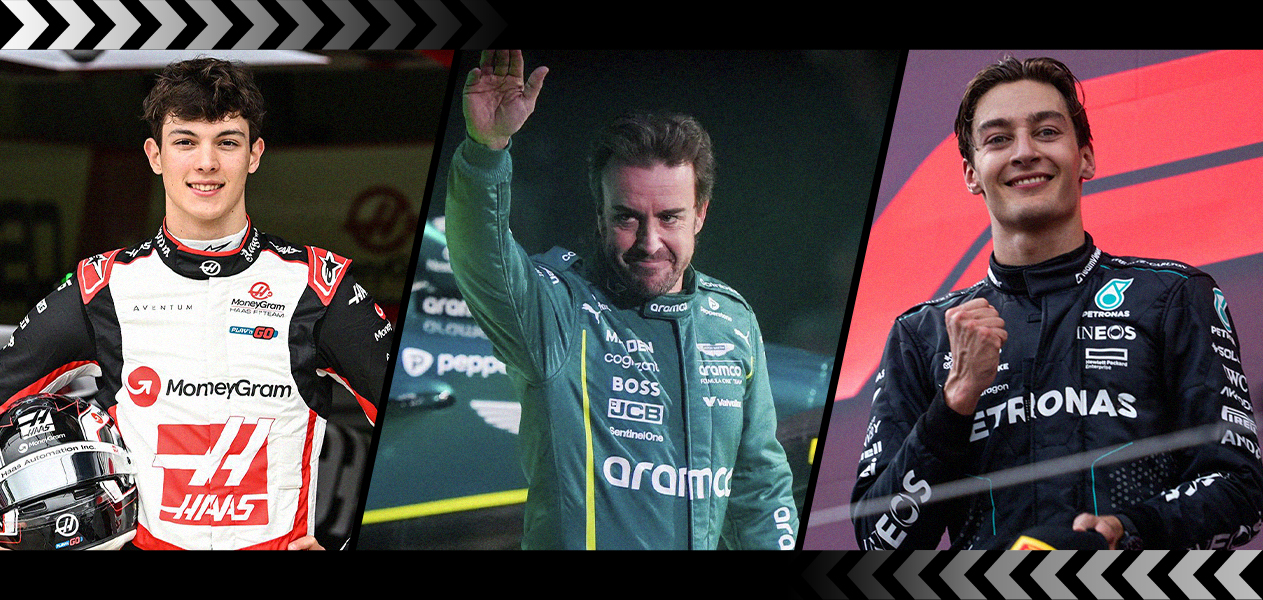
F1 2026: 10 bold predictions for the season

The highly anticipated regulation switch is finally upon us. The 2026 F1 season marks a genuine reset, where every side is starting from a near-blank slate, setting a chaotic, unpredictable landscape where champions could fall and underdogs could rise.
Here, we present ten bold predictions for the 2026 FIA Formula One World Championship.
#10 Arvid Lindblad will make his debut
Red Bull have never been shy of left-field or fast-tracked driver calls, as was most notably the case with Max Verstappen, though they also did it with Daniil Kvyat when he was thrust from GP3 to F1 a decade or so ago.
Red Bull’s senior officials have frequently raised Arvid Lindblad’s name — even on occasions when they’ve not been directly questioned about him — as a future talent, and the promotion of Isack Hadjar from Racing Bulls means Lindblad is ostensibly next in line.
Lindblad’s rookie Formula 2 campaign has been peppered with flashes of brilliance, including becoming the youngest-ever race winner in the series, thus demonstrating raw speed and remarkable maturity under pressure that few prospects possess. Moreover, his recent FP1 outings with Red Bull at the Mexican Grand Prix, where he seamlessly stepped into Verstappen’s car and delivered a near-faultless performance, proved his capability at the top level.
With the traditional Red Bull feeder team being the usual gateway for top talent to represent the Austrian outfit, and the team needing fresh blood to galvanise their line-up, all signs point to the 2026 grid welcoming a new exciting star in Lindblad.
#9 Alpine will continue to struggle at the back
Despite the wholesale chassis and power unit regulation shift for the 2026 season, which many hoped would be a clean slate for the beleaguered Enstone outfit, Alpine appear set for another year battling at the back of the grid.
The switch to Mercedes power units, while eliminating their previous Renault engine deficit, is only one piece of the puzzle; the fundamental issue lies in the factory’s persistent instability and a chassis development team that has consistently failed to deliver a consistent, high-performance platform.
Moreover, without strong, stable leadership, a revolving door of technical staff, and a current car that has openly been sacrificed to focus on the new regulations, there is simply no evidence of the cohesion and technical mastery required to master a regulation change of this magnitude.
Thus, hedging our bets on a radical leap forward while the team’s core remains fundamentally disorganised is a high-risk gamble, one that will likely see the French outfit battling backmarkers for meagre points once the lights go out.
#8 Cadillac’s debut season will be an underwhelming one
Cadillac’s maiden F1 voyage is poised to be an underwhelming experience, a sheer mountain of a task in the world’s most competitive motorsport championship.
While the backing of General Motors and the hiring of seasoned Grand Prix winners like Valtteri Bottas and Sergio Perez signal serious intent, the reality remains that they are an expansion team facing a complete technical regulation overhaul.
Building an entire F1 operation from the ground up — from key personnel recruitment and infrastructure setup to mastering the all-new chassis and drastically altered power unit rules — is a monumental undertaking, one that the established ten teams have been planning for years.
As a result, Cadillac are effectively racing against both the clock and rivals with decades of institutional knowledge, meaning the primary focus of their debut year will be on learning and survival rather than challenging for points.
#7 Oliver Bearman will become Haas’ lead driver
Oliver Bearman is not just slated to be a Haas driver for the new regulations era; he is on a trajectory to become their undisputed No. 1.
Bearman’s rookie season has so far been a revelation, demonstrating an extraordinary blend of blistering single-lap pace and racecraft maturity that belied his years. His rapid learning curve and proven ability to extract every ounce of performance from the Ferrari power unit will make him the natural focal point for the engineers.
By the time the dust settles on the opening races of the new era, expect Haas’ internal compass to point squarely at the young Briton, solidifying his status as the flag-bearer for the new-look American outfit.
#6 Williams Racing will clinch multiple podiums
Under the astute leadership of team principal James Vowles, Williams have already demonstrated a clear vision, having made the aggressive but necessary decision to halt development on the current car early and throw maximum resources at the 2026 project, a move few midfield rivals dared to make.
This early and shrewd decision to start working on a completely new power unit, active aerodynamics, and lighter chassis regulations provides a crucial time advantage, even more so when you take into account the undeniable talent and proven racecraft of a top-tier driver pairing like Carlos Sainz and Alex Albon, who can maximise any opportunity presented by chaotic early-season races.
Thus, we believe Williams will be positioning themselves as the dark horses who capitalise on the grid’s reshuffling, transforming their recent single-podium success into a consistent, front-running threat.
#5 Aston Martin will jump into podium contention
The new technical regulations are set to provide Aston Martin with a launchpad for consistent podium contention, transforming them from so-so midfield runners into a genuine front-row threat.
The ambition of Lawrence Stroll’s massive investment, which has culminated in a new factory, a state-of-the-art wind tunnel, and an elite recruitment drive, finally aligns with the ultimate competitive factor: a works partnership with Honda.
This exclusive engine deal, combined with the arrival of legendary design engineer Adrian Newey, who is entirely focused on exploiting the new aero and power unit regulations, creates a perfect storm of resources, genius, and regulatory reset.
Newey is known for his ability to find the “gray area” interpretation of new rules; couple that with Honda’s championship-winning power unit expertise as a solo supplier, and we can see how the Silverstone-based team have an unparalleled degree of design synergy and technical control, which is the necessary bedrock for any team with aspirations of fighting for regular top-three finishes.
#4 A Maranello misfire will ensue in the first half of the season
The wholesale upheaval of the 2026 technical regulations, centred on the 50/50 power split of the new hybrid engines and the active aerodynamics, sets the stage for a classic Ferrari struggle in the opening stages.
Rumours coming out of Maranello have consistently pointed to underwhelming initial performance and, crucially, lingering reliability concerns with their complex new power unit design. The fact that the team’s crucial rear suspension concept, a validation step for the 2026 chassis philosophy, proved problematic on the current car only adds to the technical director’s headache.
Given the Scuderia’s recent track record of erratic mid-season developments and the immense pressure to integrate a new technical direction, the most likely outcome is a frustrating first half where Charles Leclerc and Lewis Hamilton battle with a car that is simply too sensitive and fragile and end up playing catch-up to rivals who have the new formula’s essential trade-offs nailed down.
The championship fight will likely be a two-horse race before the summer break, and neither horse will be painted red.
#3 Max Verstappen and Red Bull will struggle with their new power unit
Early signs suggest that the shadow of the new 2026 power unit regulations hangs heavy over the Milton Keynes-based outfit, threatening to halt Max Verstappen’s reign of dominance.
While the reigning world champion and Red Bull have cemented an almost unshakeable position atop the current technical cycle, the team’s transition to manufacturing their own engine with Red Bull Powertrains and Ford is arguably the biggest unknown quantity on the grid.
Developing a competitive, reliable, and highly optimised hybrid power unit from scratch, one that is perfectly integrated with Adrian Newey’s chassis, represents a colossal undertaking against powerhouse manufacturers like Mercedes and Ferrari, who have decades of engine-building expertise.
Early whispers from the factory floor suggest that Red Bull’s fledgling power unit project is facing the typical teething issues, raising fears that a possible deficit in horsepower or, worse, chronic unreliability could see Verstappen’s quest for another title fade quickly, forcing the team to play a difficult game of catch-up against seasoned rivals from the very first race.
#2 Mercedes will again emerge with the fastest car
A familiar yet ominous cloud is beginning to stretch across the Formula 1 paddock as the monumental 2026 regulations approach: the threat of Mercedes dominance.
The sweeping engine overhaul, which mandates a near 50/50 split between combustion and heavily boosted electrical power while ditching the complex MGU-H, plays directly into the Silver Arrows’ historical strength. Their High Performance Powertrains division, the architects of the unprecedented hybrid era reign, has reportedly made staggering early progress on the new power unit design.
Whispers from Brackley suggest that Mercedes have unlocked critical efficiency gains and energy deployment strategies, positioning them to exploit the massive jump in electrical output better than any rival. With a fresh canvas to paint their masterpiece, and the championship order reset, it would be no shock at all to see them once again emerge from winter testing with an unassailable technical advantage, leaving the rest of the grid scrambling to play catch-up to the new fastest car on the grid.
#1 George Russell will win his first World Championship
If Mercedes have truly made the giant strides that most reports suggest, then the 2026 season should prove to be George Russell’s best chance for a maiden Driver’s Championship.
Mercedes-AMG were the pioneers of the hybrid era, having aced the last major engine formula change in 2014, which led to years of dominance. The 2026 regulations, which see a significant increase in the electric component to a near 50/50 power split (with the MGU-H removed and the MGU-K power increasing nearly threefold) and the use of 100% sustainable fuel, play directly to the strengths of the Brixworth engine department.
While McLaren will continue to use the Mercedes power unit, the works team will have the critical advantage of earlier and deeper integration of the chassis and engine design, allowing for superior packaging and a more optimised overall car concept from day one, which can often be the difference-maker in a regulation reset.
Russell, now the team’s de facto senior driver, is strategically positioned to capitalise on this potential powerhouse advantage, which makes him a clear frontrunner over customer teams like McLaren.