Mourinho to Madrid: A stroke of genius, or a recipe for disaster?
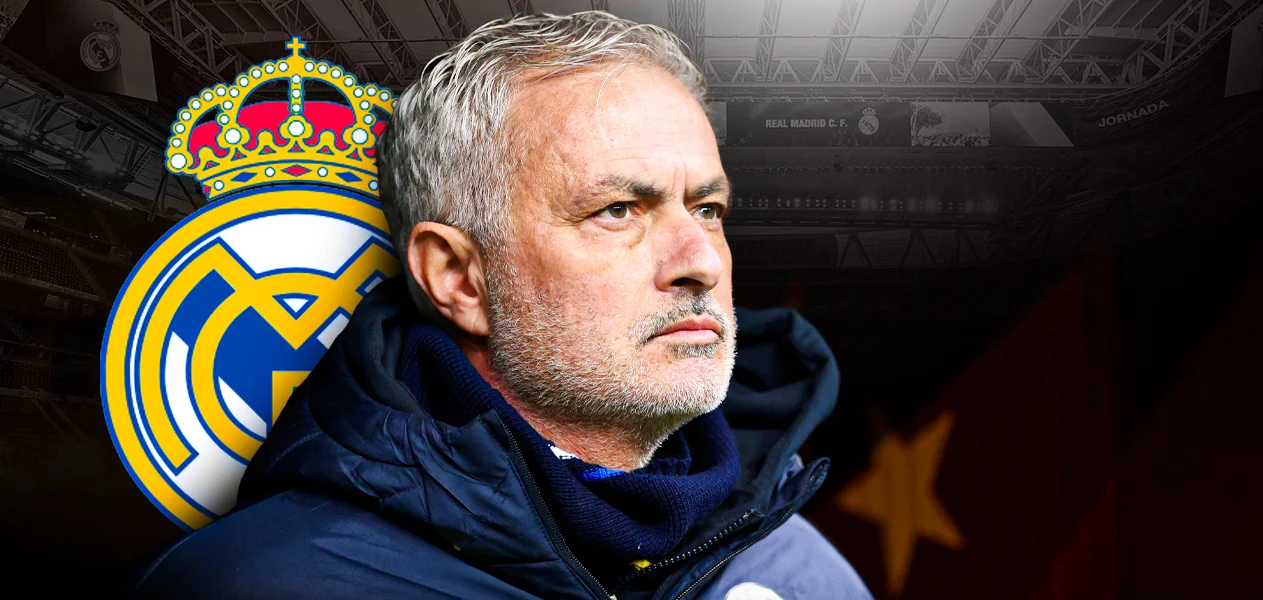
There are press conferences, and then there are spectacles. Real Madrid president Florentino Pérez’s chaotic hour-long rant on Tuesday falls categorically in the latter category. It was less of a PR stunt and more of a war cry of a tired general, surrounded by enemies both real and invented.
More importantly, it marked the dawn of a new era in the Spanish capital. Hidden in the blockbuster press conference was the truth everyone in the room already knew: that José Mourinho is on the verge of becoming the next Real Madrid manager, 13 years after his previous explosive stint.
Here, we break down why the club have decided to bring back a coach who many believe is well past his prime, and speculate on what we can expect from Mourinho and Real Madrid going forward.
Why bringing Mourinho now makes sense
The ironic thing about this association is that Mourinho’s entire managerial philosophy — the siege mentality, the weaponisation of the us-against-the-world mindset, and using the media as his number one enemy — is perfectly suited to the environment Florentino Pérez has spent years cultivating in and around the Santiago Bernabéu.
For a president who believes the press is always out for his head, while running for years the narrative that arch-rivals Barcelona have been favoured by the referees and LaLiga, the appointment of Mourinho makes sense, even more so given that his predecessor, Álvaro Arbeloa, has already brought this vision of the world to light in his short stint.
Given that three managers have come and gone with very little output in terms of mending the dressing room environment, a man with an iron fist and zero tolerance for insubordination is the need of the hour at Real Madrid.
There is no shortage of talent and star power in this team of Galácticos. However, when you look at the nature and number of fights that have been reported in recent months in a dressing room that has been allowed to run its own politics for two years, and then focus on the fact that this squad has not brought home a major trophy for a second year running, the appeal of Mourinho becomes obvious for a president who cannot control his own stars.
But appetite is not the same as wisdom. Before the Madridistas can celebrate the return of the Special One, it is worth asking this hard question: will he make the same mistakes again?
A match made in purgatory
While José Mourinho the man may still carry the same aura he had when he left the Spanish shores in 2013, his acumen as a master tactician has taken a hit since.
The Special One has not won a league title in 11 years. Although there have been a few successful cup runs, he has been either sacked or effectively pushed out the door in five of his last six jobs. All in all, the numbers are not kind, although his recent success at Benfica might pave the way for a bigger impact with a much better squad, with the Águias having gone unbeaten in Liga Portugal this season.
However, his recent spells with some of the more financially stronger clubs like Manchester United and Tottenham Hotspur have taught us that, at the core of those failed tenures, there was something beyond tactics; there was also a cultural element.
One of Mourinho’s biggest drawbacks is his assumption that his personality — his aura and force of will — is sufficient to override the values an institution has built over decades.
Make no mistake: parts of his diagnosis of what were fundamentally wrong at both United and Spurs were spot on. However, he failed to inspire both groups and instil his cultural ways.
Another indictment of Mourinho’s managerial prowess is his ability to lose the trust of both club leadership and players within three seasons.
It usually starts off well, with the majority of his squad getting behind him and silverware coming in at the end of the first or second year. However, as the pressure turns up and defeats start piling up, he starts blaming his players publicly while lapping up any success during that run. By the end, the dressing room fractures into three camps: a small group of loyalists, a large group of those who resent him, and a numb majority that simply stops caring. Club owners are happy to take this hit during his peak years.
However, in recent years, while the falling-out sequence has remained the same, the silverware inflow has certainly dried up.
I mean no disrespect, but Real Madrid are not Spurs, not even Manchester United, Chelsea, or Roma. They are a club with their own culture, their own heritage, and their own very particular expectations of what winning means.
When Mourinho was last here, between 2010 and 2013, he left behind relationships so strained that he himself, in January this year, described that period as “almost violent”.
Although the Portuguese tactician broke Pep Guardiola’s reign at the helm of LaLiga with that historic 2011/12 season that broke several domestic records, the scars from that spell still linger among the Real Madrid faithful, with the fan base divided on his appointment.
A high-stakes gamble
Florentino Pérez is not a man who looks backward often. By turning to Mourinho, he is signalling that Real Madrid have lost their way and need someone with an iron fist to find it again.
Now that a wiser Mourinho is taking charge of this fractious squad, the areas where he must improve should not come as a surprise given what we’ve discussed here at length.
First, he needs to recognise that winning is a shared vision, not a slogan to impose on his squad. The autopsy report of his tenures at Man United and Spurs reads like a manual of what not to do: failing to fully adapt his methods to his squad, ignoring the needs of some of the people around him, and taking credit for victories while offloading blame for defeats.
Secondly, and perhaps the most important aspect of this job, will be how he manages both Vinícius Júnior and Kylian Mbappé. The Vini-Mbappé problem deserves more attention. Three managers — Carlo Ancelotti, Xabi Alonso, and Álvaro Arbeloa — have now failed to make them function as a partnership.
The chemistry that was supposed to make the most feared attack in Europe simply has not materialised, and Mourinho’s record with difficult combinations and personalities has been a mixed bag so far.
Among his many success stories, he made striker Samuel Eto’o play as a right-winger at Inter Milan and won the treble with them in 2010. He also managed to make the Cristiano Ronaldo–Karim Benzema dynamic work at Real Madrid and won the 2011/12 LaLiga title with 121 goals scored, a league record.
If someone can, it is Mourinho. However, unlike his recent spells, he’d have to be willing to manage his star players with empathy and open-ended communication rather than authority alone.
Apart from the man-management aspect, the questions regarding his tactical approach are equally pressing. Modern football has evolved toward high-pressing, fluid systems. While Mourinho’s recent revival at Benfica suggests he’s still got the Midas touch, his defensive pragmatism has often felt dated when compared to the offensive, fast-paced tacticians of the current era.
However, what he is inheriting also isn’t easy by any stretch of the imagination. Two seasons without major silverware and a squad of Galácticos that played without intensity and cohesion make for a tumultuous time for anyone to be arriving at the Bernabéu.
Many might still consider his football outdated and boring, and Mourinho to Madrid is many things, but “boring” isn’t one of them. Whether it ends in a Champions League parade or a spectacular fallout by Christmas, the second coming of the Portuguese tactician ensures that the Bernabéu will once again be the centre of the sporting universe.
For better or for worse, the Special One is back.