FIFA’s sponsorship model: Here's how it differs from club football

The Fédération Internationale de Football Association (FIFA) is the highest governing body in world football and oversees events related to association football, futsal, and beach football.
In this day and age, all global competitions require financial backing, and FIFA tournaments are no exception. We have seen a massive rise in brand associations with global football clubs like Real Madrid CF, FC Barcelona, Liverpool FC, and Manchester United FC, who make a lot of money from their endorsement deals.
Unlike previously, these deals are not just limited to sportswear companies but now make for a diverse portfolio that could include food & beverage brands, tours and travel companies, aviation giants, casual apparel wear brands, makers of health supplements, and so much more.
For its global events and competitions, FIFA onboards a number of brands for sponsorship. However, FIFA’s sponsorship model differs from the one employed by major football clubs.
Here, we take a look at all the ways in which FIFA’s sponsorship model differs from club football sponsorships.
1. Structured sponsorship levels
As opposed to club football sponsorship, FIFA has a different structure of sponsorship levels, which include:
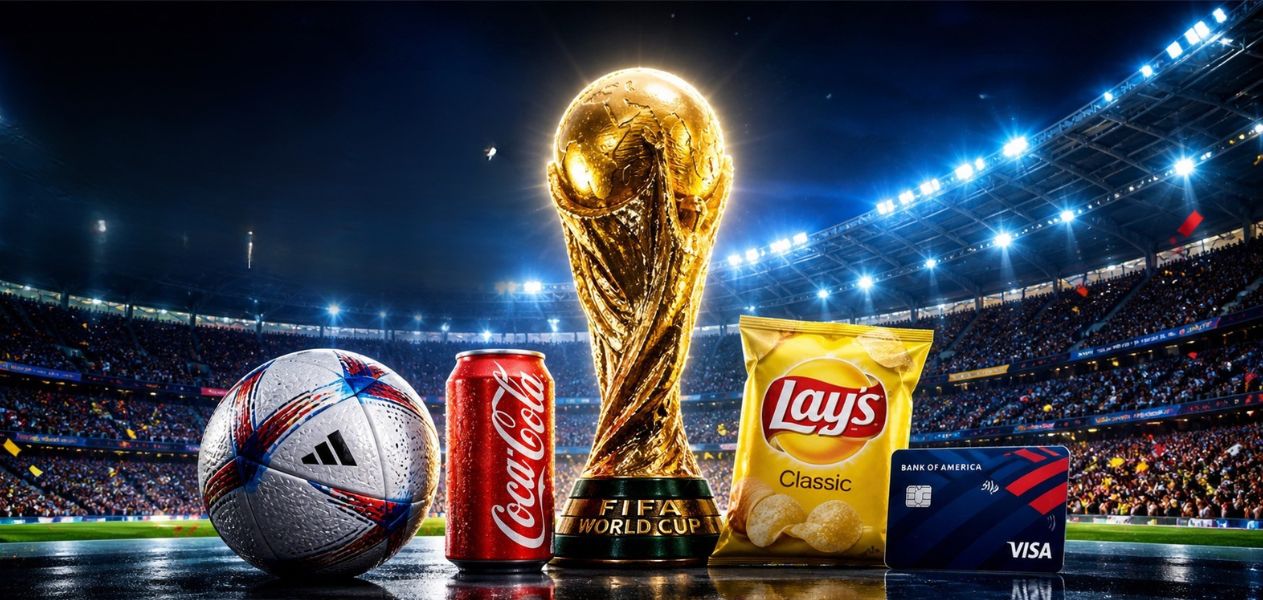
- FIFA Partners: This is the topmost tier that provides support and sponsorship across all FIFA events. Some of the FIFA Partners are Coca-Cola, Adidas, and Lenovo.
- FIFA World Cup Sponsors: This is the second tier that provides global brand sponsorship specific to the 2026 FIFA World Cup. Some of the sponsors in this category are McDonald’s, Verizon, Lay’s, and Bank of America.
- Regional Supporters: This is the last tier, where the branding rights are limited to a specific geographical region. Since the 2026 FIFA World Cup is being held in North America, some of the regional supporters for the event are brands from the continent, like The Home Depot and Valvoline.
In contrast, we take a look at the fragmented sponsorship structure in club football, which focuses on high-frequency visibility.
- Shirt sponsor: These brands get visibility on a team’s matchday and training kits. They can feature front and centre on a shirt, on the sleeves, on the back of a shirt, or on the shorts.
- Kit supplier: All clubs have a sponsorship deal with a sportswear company that supplies them with kits, shoes, and accessories.
- Stadium naming rights: Some clubs have major partnership agreements that include stadium naming rights for a duration. Case in point, Arsenal FC have a partnership with Emirates, due to which their home ground is called the Emirates Stadium.
2. Duration and frequency of the sponsorship
FIFA sponsorship deals are generally built around a four-year World Cup cycle and change once the event is over. In contrast, club football deals have various sponsorship durations; they could be short-term or long-term depending on several factors.
For instance, a few brands team up with clubs if one of their players has already been endorsing them, and they may cut ties once the player departs that club.
That is not the case with FIFA, whose partnerships are usually not bound to any specific player or other regional factors. Instead, the major emphasis lies on events they organise.
3. Offering brand exclusivity
Unlike football clubs, FIFA is cognisant of offering brand exclusivity to its sponsors. For context, if a beverage brand like Coca-Cola is a major sponsor, then FIFA will not onboard another sponsor from the same category. In contrast, clubs often don’t have such qualms and look to maximise revenue.
Even a club football jersey can have multiple sponsors, and not just because several spots on a shirt are up for grabs. Sometimes, the principal front-of-shirt sponsorship can be taken up by more than one brand, with only one enjoying visibility during a game based on, say, what competition the team are playing in.
4. Scope of association
FIFA’s scope of association with brands works differently from that of club football. The world football body collaborates with brands for a global event or tournament that reaches people beyond their favourite team, whereas the scope of association between a brand and a club is mostly limited to the latter’s fan base, be it across the world or in specific regions.
If we compare the two, FIFA collaborations have a far wider reach than the ones we see in club football, as the World Cup alone is an eagerly awaited, widely watched event around the world and is not dependent on a particular club’s fan base, locality, or other preferences.
5. Protection of rights (IP protection and anti-ambush)
Ambush marketing is a prohibited activity that tries to take advantage of the visibility of a high-profile event by creating a commercial association. This is done to seek exposure without the authorisation of the event organiser.
In accordance with its anti-ambush strategy, FIFA strictly protects its intellectual property (IP), which includes the federation’s logos, trophies, emblem, and phrases, in order to ensure value for official sponsors. FIFA uses strict legal measures to ensure only official sponsors have rights to its IP, and non-sponsors are prohibited from using FIFA Trademarks.
6. Impactful brand activations
Brands collaborating with FIFA are not only limited to pitch-side boards and screens; they also leverage engagement through other activations, such as Coca-Cola’s FIFA World Cup 2026 strategy.
Regional brand activations will also be visible across the 16 host cities in North America this summer, with advertising near stadium exits, fan zones, and transit lines.
As part of digital and social engagement, partner social media platforms such as TikTok and JioHotstar will be involved in innovative brand campaigns to attract football fans.
FIFA sponsorships focus on intense, short-term global brand associations, whereas club sponsorships tend to be long-term, year-round brand activations targeting extensive engagement.